Barney O’Hern Circus – The Spec
History
The Barney O’Hern Circus, officially Barney O’Hern’s World Wide Circus, was a postwar American tent show that operated solely during the 1946 season, capitalizing on the surge in demand for affordable, live entertainment as the U.S. recovered from World War II. Founded by Barney O’Hern, a veteran showman with roots in vaudeville, carnival concessions, and sideshow management for larger circuses like Hagenbeck-Wallace, the operation was a modest one-ring affair aimed at rural and small-town audiences in the Midwest and Northeast. O’Hern, who had been in the business since the 1920s, assembled a lean troupe of equestrians, wire walkers, trained animals (dogs, ponies, and a single elephant), clowns, and showgirls for glamorous touches. The circus toured 40–50 dates across states like Ohio, Pennsylvania, New York, and Illinois, often at county fairs, VFW events, and lots under a refurbished big top seating 800–1,000.
“The Spec” refers to the “spectacle” or opening parade in circus terminology—a grand procession of performers, animals, and wagons circling the ring to preview the show’s acts and build excitement. For Barney O’Hern’s 1946 tour, the spec was a highlight, featuring the full menagerie and cast in colorful costumes parading under the tent, often with brass band accompaniment and novelty elements like elephant trunk salutes or clown antics. This poster variant promoted the spec as the “World Wide Spectacular,” emphasizing the parade’s exotic allure to draw crowds to stops like the Erie County Fair or Pittsburgh venues. Postwar constraints—fuel shortages, labor issues from returning GIs, and competition from radio—doomed the show; O’Hern liquidated assets and returned to carnivals, making it a classic “one-season wonder” in mud show history.
Design
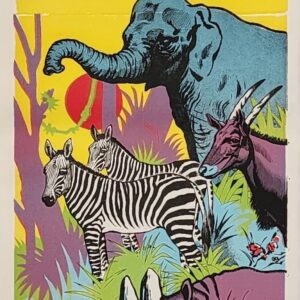
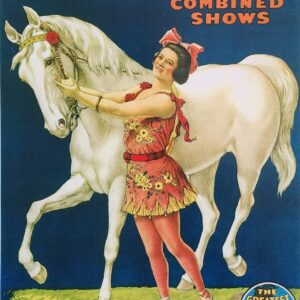
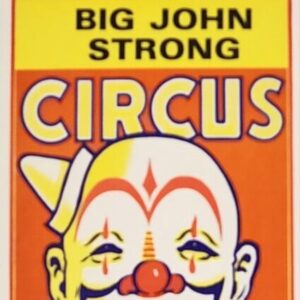
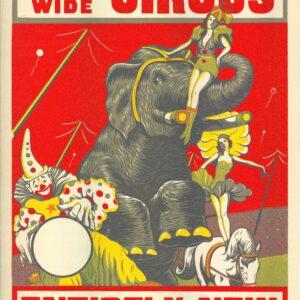
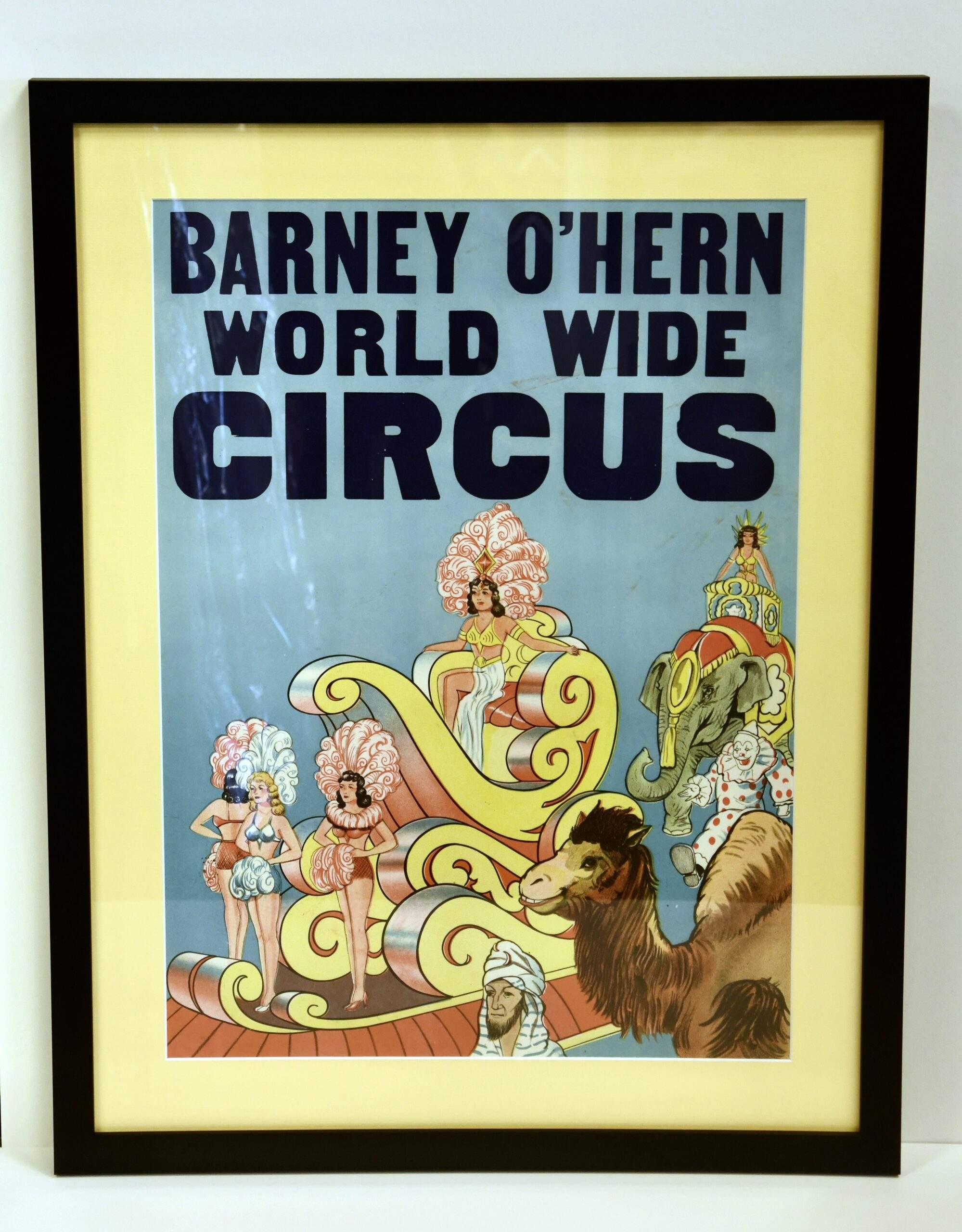
The “Barney O’Hern Circus – The Spec” poster captured the lively offset lithography of 1946, designed for bold roadside impact on a tight budget to hype the opening parade. Printed as a half-sheet (21×28 inches) on sturdy stock for weather resistance, it used a vibrant primaries palette—scarlet reds for energy, golden yellows for festivity, and deep blues for tent stripes—against a white field to stand out in rural vistas. The composition burst with a panoramic procession: a rearing elephant led by a showgirl in feathered headdress and gown, flanked by tumbling clowns in polka-dot suits, prancing ponies with bareback riders, and wire walkers balancing on stilts, all marching toward a striped big top horizon evoking global wanderlust. Subtle motifs like exotic “world wide” banners and animal silhouettes (zebra stripes, dog leaps) framed the chaos, symbolizing the spec’s preview of thrills.
Typography featured arched sans-serif block letters for “BARNEY O’HERN WORLD WIDE CIRCUS – THE SPEC!” in oversized caps, with script flourishes for “Grand Opening Parade! Majestic Menagerie March!” and a lower strip for custom dates/prices (e.g., “Aug. 20, Cleveland – 25¢ Adm.”). Drawing from 1930s stock templates, the design blended Art Deco fluidity (horse manes, gown flows) with cartoon exaggeration (clown pies, elephant grins), its fold lines and paste remnants adding authentic wear. This style bridged wartime posters’ optimism with circus hyperbole, prioritizing communal pomp over individual stars.
Cultural Significance
The “Barney O’Hern Circus – The Spec” poster epitomized the postwar circus as a fleeting communal elixir—a parade of possibility that stitched war-torn heartlands with threads of wonder, where the spec’s procession mirrored America’s procession toward normalcy. In 1946, as families grappled with reintegration and rationing’s end, the imagery invoked archetypes: the elephant as colossal rebirth, showgirls as feminine resurgence post-Rosie, clowns as absurd relief from atomic anxieties—collectively transforming fairgrounds into egalitarian utopias. As a microcosm of mud shows’ grit, it preserved Barnum’s democratized fantasy on local scales, influencing mid-century graphics and revivals like The Greatest Showman, while glossing ethical frays (animal use, performer hardships). Today, it evokes poignant impermanence amid digital spectacles, fueling discourses on heritage in animal-free eras and the spec’s role as social ritual in pre-TV bonds.
Production and the Company Behind It
Barney O’Hern’s World Wide Circus was a proprietorship under Barney O’Hern’s Pittsburgh helm, launched on a $4,000–$6,000 budget with winter prep in rented lots. Setup included a 60-foot single-ring tent from 1930s auctions, an 8-act bill with family (O’Hern’s wife on wires) and hires, and a 20-roustabout crew for multitasking. The spec, a 15-minute opener, mobilized the full cast—elephant parades, clown chases, showgirl flourishes—under brass cues for the 90-minute program. Posters printed in 200–300 runs by Cincinnati’s Enquirer Job Print Co. or Pittsburgh offsets used two-color presses for economy; advance scouts pasted them two weeks out, adapting stock parade motifs with O’Hern branding to tout “The Spec” as family bait. Animals (loaned regionally) got basic care; surplus prints were scrapped, enhancing scarcity.
Relevant Archival Sources and Modern Interest in Such Labels
Archival Sources:
- Circus World Museum (Baraboo, WI): Robert L. Parkinson Collection holds 1946 indie ephemera, including O’Hern spec route cards and poster stubs; digitized via Wisconsin Historical Society for postwar parade research.
- University of Iowa Libraries Special Collections (Iowa City, IA): Hake’s Americana archives feature Midwestern fair posters with 1946 O’Hern spec references and procession photos.
- Library of Congress Prints & Photographs Division (Washington, DC): Circus Poster Collection (1840–1950) includes spec analogs; folklife tapes detail 1940s showmen on opening parades.
- Bandwagon Magazine Archives (Circus Fans Association): Digitized 1946 issues index O’Hern reviews, spotlighting spec acts and designs.
This Barney O’Hern The Spec with camel, elephant and showgirls poster is the sister of Dog & Pony poster. They were produced in 1945 and are 79 years old as of 2024. Barney O’Hern Circus advertised for acts in Billboard on March 2nd, 1946. The show, run by Barney O’Hern (Owner), James O’Hern (Treasurer) and Rudy Jacobi (Manager), was a truck show that toured California and Nevada for one season only following World War II and then closed.
His son, Pat O’Hern said “My Dad took out the Barney O’Hern World Wide Circus in 1945 and part of 1946. I traveled with the show and worked in the Winter Quarters and sometimes as performer while on the road. The show was a three ring, tent show with a side show and several “pit shows” and traveled by truck. We played in both California and Nevada. “
While there are 12 different posters produced for this circus, only two were half-sheets (21” by 28”). All the others are one-sheets (42” by 28”)


Reviews
There are no reviews yet.