K-O Brand Apples Fruit Crate Label, Circa 1935–1950s
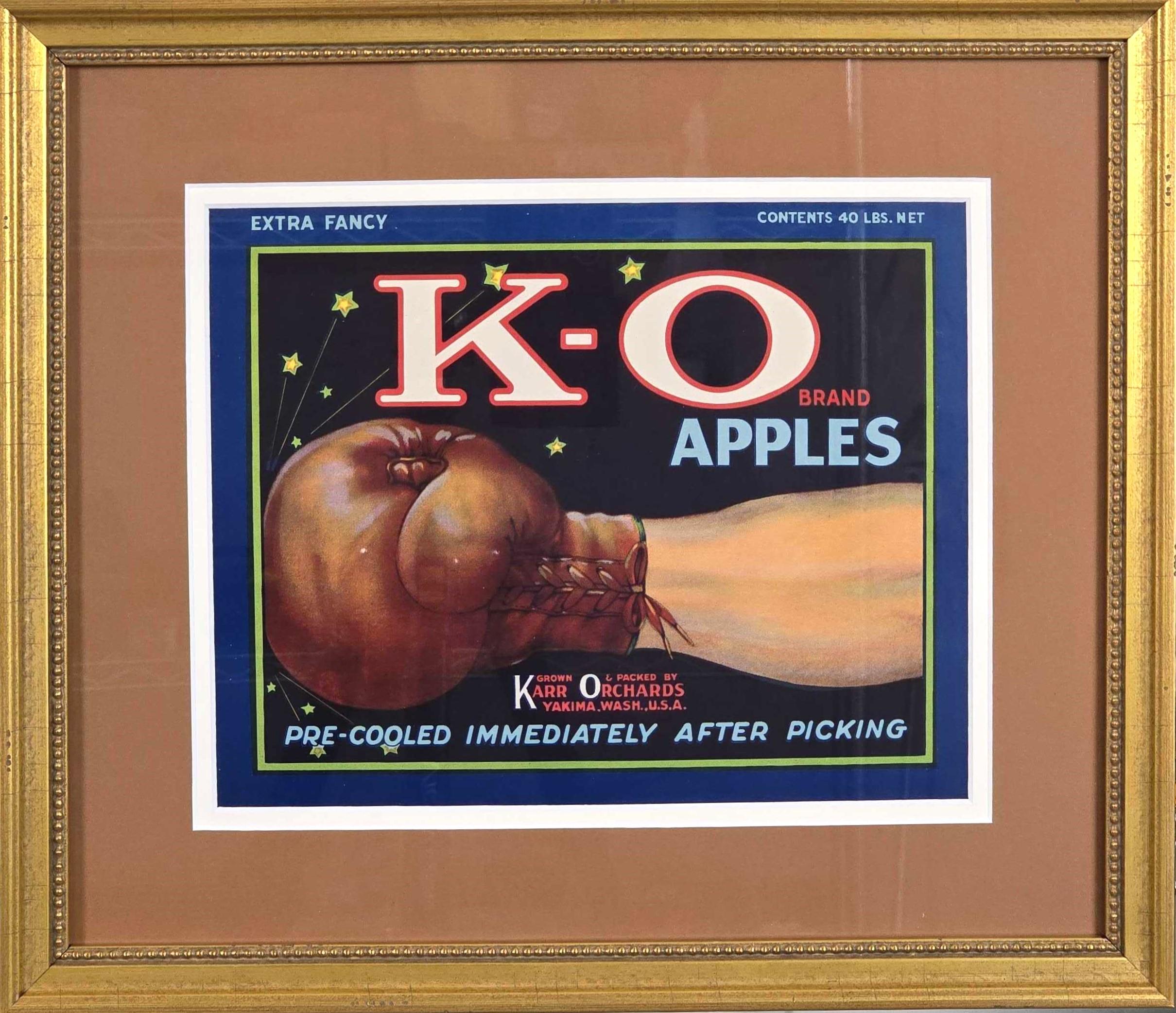
The K-O Brand Apples Fruit Crate Label is a striking artifact from the “commercial era” of Pacific Northwest apple labeling, produced primarily in the 1930s–1950s by Karr Orchards in Yakima, Washington. Featuring a bold boxing glove motif, it exemplifies mid-century trends toward simplified, memorable designs that prioritized brand retention amid economic challenges like the Great Depression and WWII. The label branded wooden crates of premium apples (e.g., Red Delicious, Golden Delicious), shipped nationwide via rail, symbolizing both agricultural prowess and subtle commentary on labor struggles.
History and Production
The label emerged during Washington’s apple boom, ignited by 1880s rail shipments from Yakima Valley to Eastern markets, which transformed arid lands into orchards via irrigation (e.g., Sunnyside Canal, 1890s). By the 1930s–1940s, the state dominated U.S. production (over 60% of apples), with Yakima shipping millions of boxes annually. K-O labels were lithographically printed—using vibrant, multi-color stone processes—for wooden crates sized about 10 x 9 inches, pasted on ends for wholesale identification. Production focused on seasonal peaks (September–November), with bold colors denoting grades (e.g., red for premium). Printed by regional firms like those in Seattle, runs numbered in thousands; labels showed moisture wear from cold storage. The era ended in the 1950s with mechanization and pre-printed cardboard boxes, influenced by WWII rationing and post-war efficiency.
Design
A hallmark of the commercial era (1935–1955), the label employs minimalist flair: a large, shiny red boxing glove—evoking a ripe apple—dominates the center, with “K-O” in bold, easy-to-remember block letters arched above. The composition uses stunning patterns and vibrant reds/yellows on a simple background, prioritizing customer recall over ornate details. This simplification trend, per label historian Pat Jacobsen, ensured visibility on stacked rail cars while nodding to 1920s Art Deco remnants. Sized for one-bushel crates, it balanced functionality with eye-catching appeal for urban buyers.
Company Behind It
Created by Karr Orchards, a family-run grower-packer in Yakima, Washington, established around the early 1900s amid the valley’s cooperative surge (e.g., 1903 Yakima County Horticultural Union). Affiliated with groups like the Yakima Valley Growers-Shippers Association (est. 1917), Karr handled harvesting, sorting, and crating from rail-side facilities, shipping via Northern Pacific Railroad to East Coast markets. The brand emphasized high-grade, sun-ripened apples to compete in a cooperative industry. No key figures are prominently documented, but operations mirrored small-scale models like those of contemporaries Fred B. Plath, thriving during the Roaring Twenties before Depression-era strains.
Cultural Significance
The K-O label encapsulates Yakima’s frontier-to-industrial evolution, built on 1855 Yakama Nation land cessions enabling white settlement and agriculture. The boxing glove references the 1913 Battle of Congdon Orchards—a violent clash between Industrial Workers of the World (Wobblies) union organizers and anti-union growers—highlighting labor tensions amid multicultural workforce (Yakama, Latino, Japanese laborers). It romanticizes Western grit and Manifest Destiny bounty, appealing to consumers with “authentic” Americana while glossing over exploitation. As ephemera, it reflects advertising’s shift to bold branding, influencing pop culture and sparking modern debates on labor history and appropriation in Smithsonian-style exhibits.
Archival Sources and Modern Interest
- Yakima Valley Museum: Fruit Label Collections: Archives thousands of Yakima labels since 1970s, including K-O examples; hosts annual swaps (e.g., 2022) and exhibits like “History on a Box.” Research access by appointment; features John Baule’s “The Ultimate Fruit Label Book” with K-O details.
- Archives West: Fruit Crate Labels Collection (1916–1977): Washington State University’s digitized archive of 489 labels; searchable by brand/state, with Yakima examples and production notes.
- California Historical Society (CHS) Flickr Commons: Digitized scans of K-O and similar labels; no copyright restrictions, ideal for visual research.
- Modern Interest: Actively collected at swaps and auctions; Washington apple labels fetched $51,000 in sales (1992, adjusted to ~$100,000 today). Sites like fruitcratelabels.com and eBay sell originals ($20–$150), with demand from historians and decorators. Featured in 2023 Capital Press articles and 2025 exhibits amid nostalgia for Yakima’s heritage; values rise for labor-themed rarities.
This fruit crate label was used by Karr Orchards in Yakima, Washington. This action-packed label with a boxing glove hitting side of label has stars shooting out from the blow. Grown and Packed Karr Orchards in Yakima, Washington, U.S.A. This original bale measures 10 inches wide and 8 inches tall. Framed measurements are 15 1/8 wide and 13 1/8 tall.
Reviews
There are no reviews yet.