
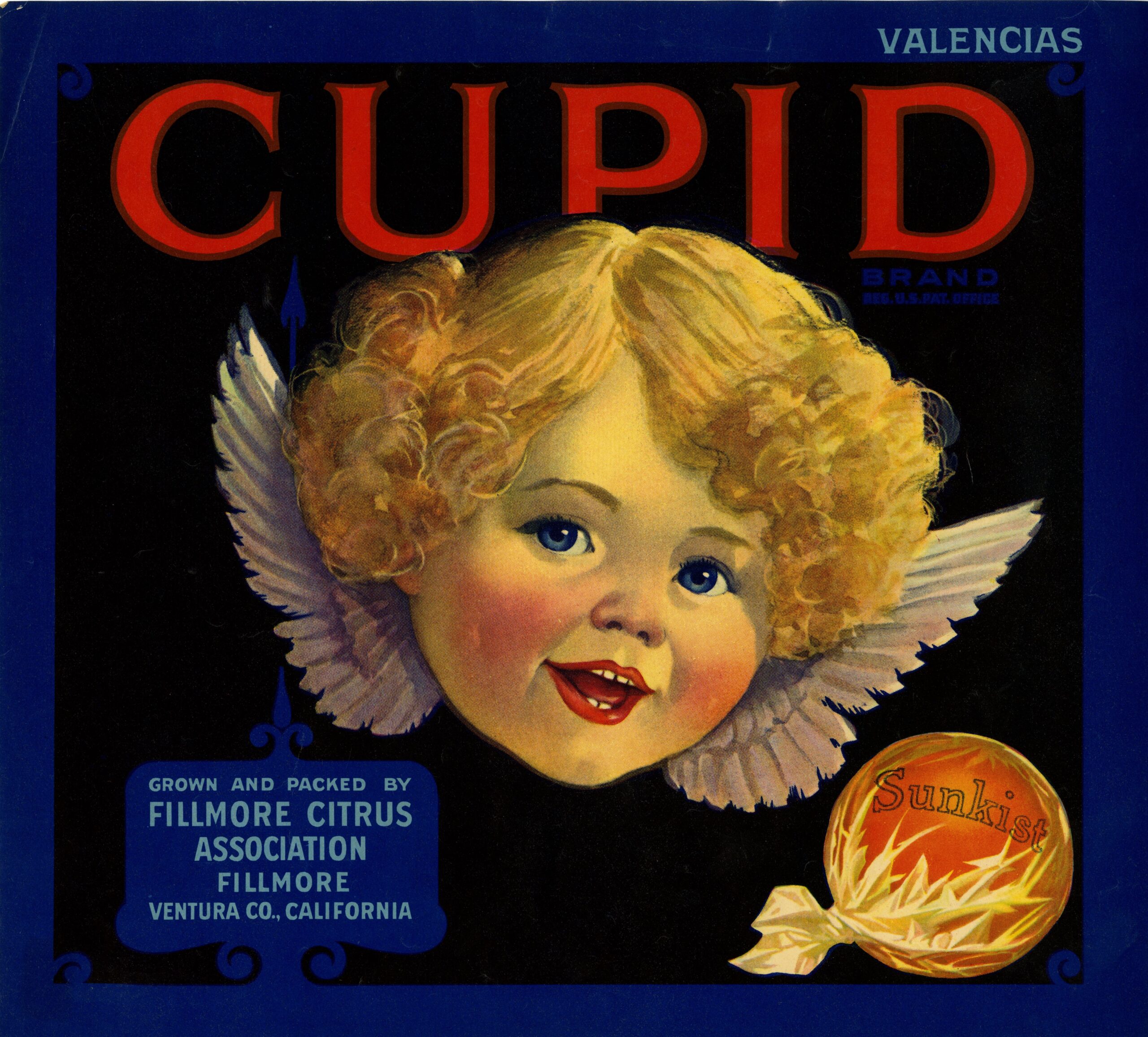
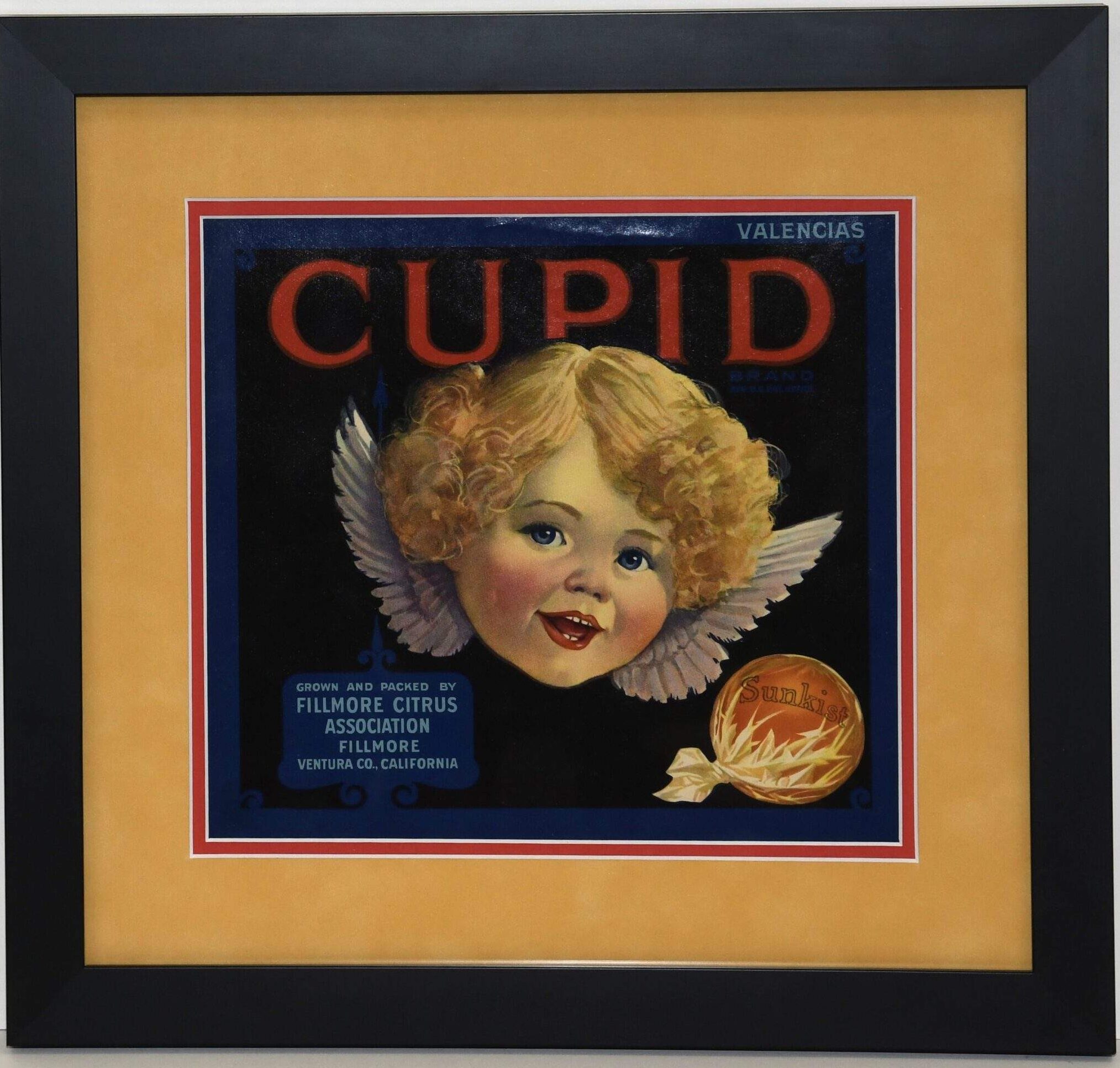
Cupid Valencias Sunkist Oranges c. 1920
Grown and Packed by Fillmore Citrus Association, Fillmore, Ventura County, California.
The original label measures 10 inches by 11 inches. This framed label measures 12 inches tall by 15 inches wide.
It started as a dream. The dusty, windswept Santa Clara Valley would one day be “a vast fruit orchard.” That dream took shape in 1897 when seven very bold pioneers united to form a cooperative: the Fillmore Citrus Fruit Association. From the very beginning, they set out to grow the finest citrus in the world. Essential to this new venture was a grower-owned packing house. This would insure that the citrus would be packed and shipped to protect that just-picked freshness. Today, that dream has not only endured it has flourished. Our deep company roots produce the highest quality. That time-tested process makes sure the citrus arrives fresh, fragrant and juicy goodness. Yes, it’s a journey that has taken us over 100 years to perfect… but only a moment for you to savor.
The Cupid Brand label was produced in the 1920s to 1930s, with primary usage during the interwar period of California’s citrus crate labeling boom (circa 1900–1940), before the widespread adoption of cardboard boxes in the 1940s.
Design features like vibrant lithography, whimsical cherub/Cupid imagery (often a smiling winged child with bow and arrows or butterflies), and ornate typography are characteristic of 1920s–1930s prints from Southern California lithographers such as Mutual Label & Litho. Co. Collector listings and archival records consistently date originals to 1920s–1930s, with some reproductions referencing early 1900s variants; uncertainties include minor print run differences, but no confirmed evidence predates 1920 or extends beyond the 1930s for this association’s version.
The label supported Fillmore’s citrus expansion in Ventura County’s Santa Clara Valley, where orange groves boomed after 1889 plantings and refrigerated rail cars enabled national shipping from the 1890s onward. It branded wooden crates to market premium produce amid competition, contributing to California’s dominance (over 50% of U.S. oranges by 1930); Fillmore had multiple packinghouses by the 1920s, shipping thousands of crates annually.
Founded in 1897 by seven local pioneers (with David Felsenthal as first president) as a grower cooperative, Fillmore Citrus Association built its initial packinghouse in 1899 for $1,500 at Sespe Avenue and A Street. The association innovated with orange (1918) and lemon (1924) facilities, organized employee bands (e.g., Mexican Band in the 1920s for community events), and expanded to a second orange house in 1946—now featuring label murals at Nova Storage.
Rail connections in the 1890s–1920s boosted exports, but the Great Depression strained operations; WWII increased demand for vitamin-rich citrus. The association merged or rebranded as Fillmore-Piru Citrus Association (still active in 2025, celebrating 128 years), adapting to modern packing while preserving legacy through annual barbecues and cultural events like the 1928 lemon house opening concert.
The label’s central Cupid/cherub—a winged, smiling child with bow, arrows, and butterflies against floral or sunny backdrops—employs playful, lithographic illustration in pastel hues, evoking whimsy and romance typical of 1920s–1930s advertising art that transformed crates into “postcards from paradise.”
Rooted in Ventura County’s agricultural heritage (from dusty valleys to “vast fruit orchards”), the Cupid motif draws from Greco-Roman mythology (Eros/Cupid as love’s embodiment), symbolizing abundance, fertility, and temptation—mirroring fruit’s dual role in myths as both gift and seduction. It reflects Roaring Twenties optimism, gender ideals (playful femininity), and multicultural labor (e.g., Mexican workers in groves and bands), promoting California’s “exotic” bounty to urban markets while tying into Valentine’s themes for emotional appeal.
As authentic collectibles, these labels preserve Americana, appearing in exhibits on migration and harvest rituals; Cupid imagery echoes broader trends in Renaissance-to-Rococo art (e.g., Botticelli’s Venus) and modern revivals, highlighting love’s commercialization and fruit’s symbolic ties to desire and plenty.
The Fillmore Citrus Association (now Fillmore-Piru Citrus Association), a grower-owned cooperative in Fillmore, California, was established in 1897 to centralize packing. The Cupid Brand focused on Valencia and navel oranges (juicy, seasonal varieties for fresh markets), with labels pasted on wooden crates during winter peaks; key figures include founders like David Felsenthal and later managers like Frank Erskine (1920s band organizer).
From facilities at Sespe Avenue (original site) and later expansions, it handled harvesting from local groves (5–100 acres), sorting, and shipping via rail to U.S. East Coast and beyond. By the 1930s, it packed thousands of tons annually, emphasizing quality for export; today, Fillmore-Piru operates at 357 N. Main Street, Piru, sourcing 100+ growers for fresh citrus.
Trade Associations, Partnerships, and Legacy: Early affiliate of the California Fruit Growers Exchange (Sunkist precursor, 1905), aiding marketing and logistics; partnerships included local railroads and co-ops. No major mergers until the Piru integration (post-1940s), but it remains independent under Sunkist influences. Legacy endures through active operations (e.g., 2025 navel season prep) and historical markers; brands like Cupid are archived, with no direct successors but ongoing citrus exports.
Websites and Information Sites
Reviews
There are no reviews yet.