Giant Zoo
History
The “Giant Zoo” refers to a series of promotional posters and ephemera associated with mid-20th-century American tent circuses that emphasized expansive menageries, often billing themselves as featuring the “Giant Zoo” or “World’s Largest Zoological Exhibit” to highlight exotic animal displays alongside acrobatic and clown acts. This branding peaked in the 1940s–1960s, during the postwar boom in family entertainment when circuses like Ringling Bros. and Barnum & Bailey, Sells-Floto, and smaller independents (e.g., Cole Bros., Hoxie Bros.) toured rural America, drawing crowds with promises of global wildlife under canvas. Rooted in 19th-century traditions pioneered by P.T. Barnum’s menageries (e.g., his 1880s “Greatest Show on Earth” with imported elephants and big cats), the “Giant Zoo” motif evolved as a marketing hyperbole amid economic recovery, urban flight, and pre-TV escapism. Posters typically promoted seasonal tours stopping at county fairs, VFW lots, and small-town arenas in the Midwest and South, with acts including elephant parades, lion-taming, and chimp routines sourced from international auctions. By the 1970s, rising animal welfare concerns (e.g., early PETA campaigns) and costs led to a decline; many shows folded or phased out menageries, with the last major “Giant Zoo” billing fading by the 1980s as Ringling retired elephants in 2017. Specific examples, like a 1950s Cole Bros. “Giant Zoo” one-sheet, captured this era’s blend of wonder and logistics, where advance crews plastered posters weeks ahead to build hype for 1,000–2,000-seat big tops.
Design
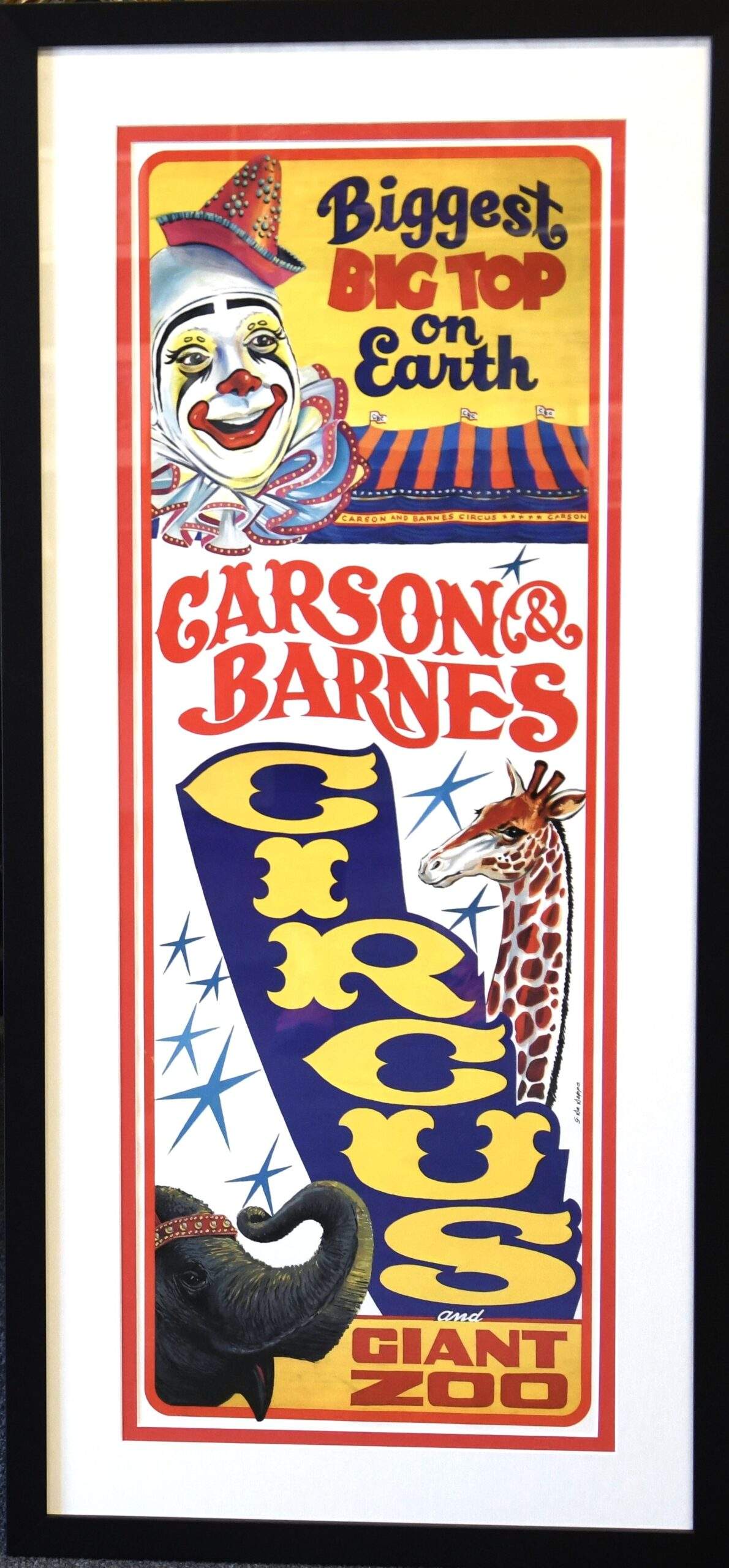
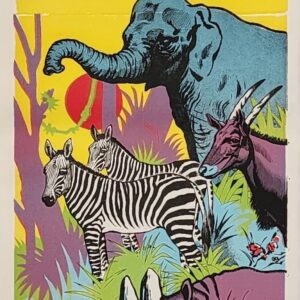
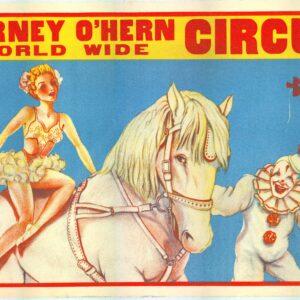
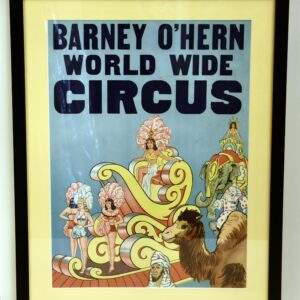
“Giant Zoo” posters embodied the bold, hyperbolic offset lithography of postwar American printing, designed for high-visibility roadside and barn postings to evoke untamed spectacle on a budget. Typically one-sheets (28×42 inches) or half-sheets (21×28 inches) on heavy, weather-resistant stock, they exploded in primaries—vibrant yellows for savanna suns, deep blues for ocean exotics, fiery oranges for big cats—against stark white or striped tent backdrops for legibility from 50 feet. Central compositions crammed dynamic vignettes: rearing elephants with trainers atop howdahs, prowling lions mid-roar in cages, giraffes peering over zebras, and chimp troupes in playful chaos, often framed by arched banners proclaiming “GIANT ZOO – 100 Wild Animals!” in chunky sans-serif fonts; subheads like “Thrilling Menagerie March!” trailed in italic script, with customizable date strips below for locales (e.g., “Topeka, KS – July 15”). Influences from Strobridge Litho Co.’s 1880s templates (e.g., Charles Livingston Bull’s iconic leaping tiger) persisted, blending photorealistic animal renders with cartoonish exaggeration—tusks oversized, eyes anthropomorphic—to stir childlike awe. Fold creases, paste stains, and edge tears from field deployment added patina, reflecting a transitional style: Depression-era restraint yielding to 1950s optimism, prioritizing quantity (dozens of species) over narrative depth.
Cultural Significance
The “Giant Zoo” posters symbolized the circus as America’s postwar idyll—a roving ark of imperial fantasy that transported heartland families from assembly-line monotony to colonial reveries of African safaris and Asian jungles, reinforcing manifest destiny through tamed wilderness. In the 1940s–1960s, amid baby booms and suburban sprawl, these visuals democratized “exoticism” for working-class audiences, blending education (animal facts in fine print) with thrill to foster communal bonds at fairs where locals bartered gossip under canvas. Yet, they masked ethical shadows: glorifying captivity amid emerging conservation (e.g., 1960s wildlife docs) and glossing labor rigors for handlers and performers. As vernacular art, they influenced graphic design (e.g., Saul Bass’s bold minimalism) and pop culture—from Disney’s Dumbo (1941) to The Greatest Showman (2017)—while embodying the big top’s role as social leveler in pre-cable eras. Today, post-Ringling closure, they evoke bittersweet nostalgia for imperiled traditions, sparking debates on decolonizing spectacle (e.g., #CircusFreeFromAnimals) and inspiring ethical revivals like human-only Cirque du Soleil, where “zoo” motifs nod to lost wonders without exploitation.
Production and the Company Behind It
“Giant Zoo” posters were produced by regional lithographers like the Strobridge Lithograph Co. (Cincinnati, OH) or Enquirer Job Print Co. for independent circuses, often as proprietorships run by show families (e.g., the Cole Bros. under W.H. “Buck” Cole since 1926). Operations centered on mobile logistics: 80–100-foot single-ring big tops seating 1,500–3,000, rail or truck transport for 50–100 animals (elephants from Thailand, lions from Africa via brokers), and 10–15 act programs with menageries as the draw—parades at noon, feeding demos, and “wild animal olympics.” Budgets ran $15,000–$40,000 seasonally, offset by 50¢–$1 tickets and concessions; advance agents (2–4 weeks out) pasted 300–600 posters per stand, customizing with routes via nail-stuck date panels. Animals received on-site care (e.g., hay wagons doubling as vets’ quarters), with posters emphasizing scale—”200 Animals from 5 Continents!”—to justify modest herds. By the 1960s, USDA regs curbed “giant” claims, shifting production to safer, smaller prints.
Relevant Archival Sources and Modern Interest in Such Labels
Archival Sources:
- Circus World Museum (Baraboo, WI): Vast ephemera trove in the Robert L. Parkinson Library (50,000+ photos, 8,000 posters), including 1950s “Giant Zoo” variants from Cole Bros. and Sells-Floto; digitized via Wisconsin Historical Society for menagerie routes and designs.
- The John and Mable Ringling Museum of Art (Sarasota, FL): eMuseum holds 300+ lithos and programs (e.g., 1940s Ringling “World’s Greatest Menagerie”), plus FSU Digital Repository for scrapbooks and films on zoo acts; searchable for postwar examples.
- Library of Congress Prints & Photographs Division (Washington, DC): Circus Poster Collection (1840–1950) features analogs like Strobridge “Giant Menagerie” prints; folklife recordings detail animal sourcing.
- Illinois State University Milner Library Digital Collections: Circus and Allied Arts holdings with 8,000+ volumes, including “Giant Zoo” programs from Hoxie Bros. tours.
Reviews
There are no reviews yet.