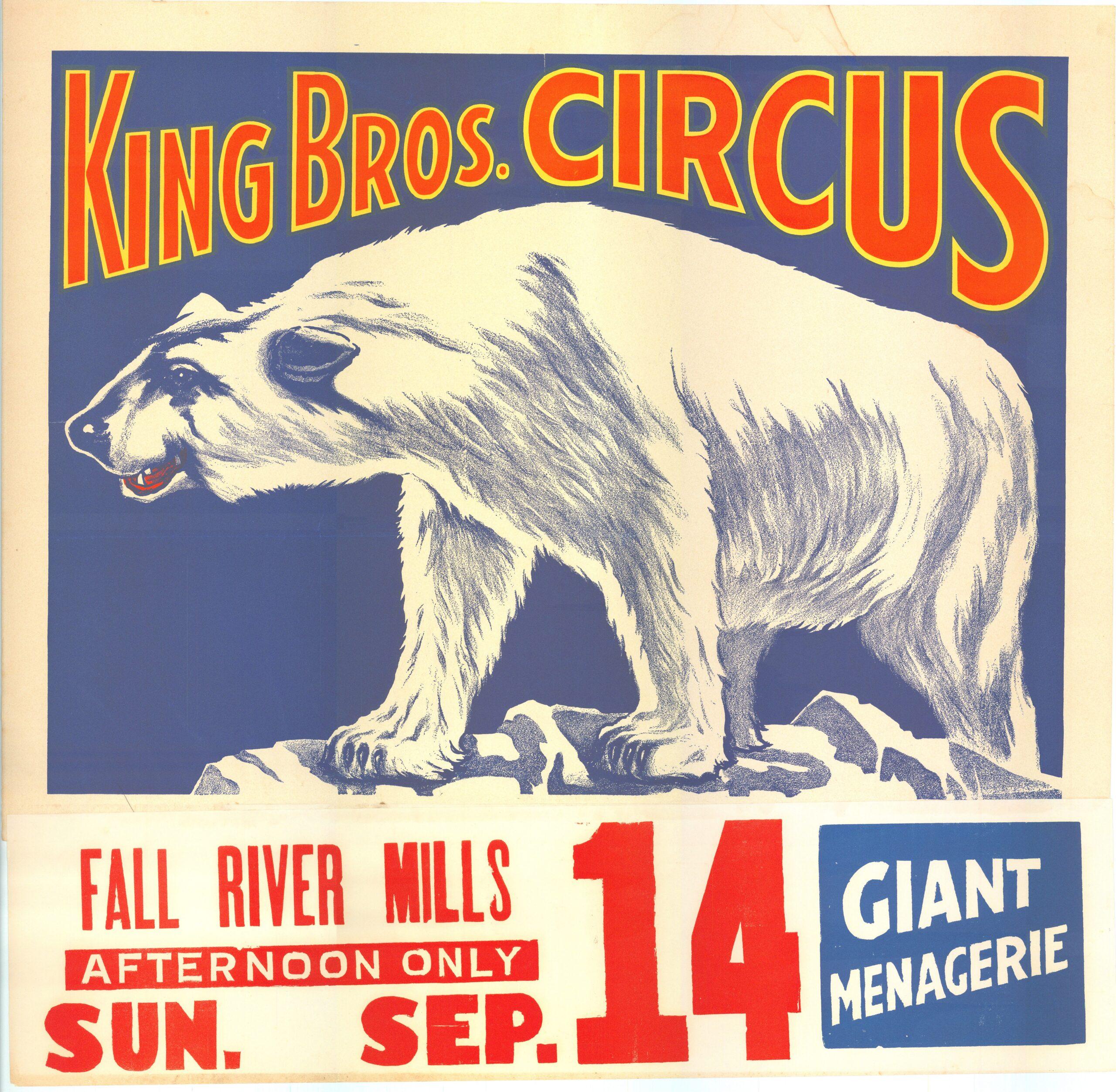
King Bros Circus Polar Bear c.1950
Unframed Half – Sheet with Fall River Mills, California Date Strip
The King Bros. Circus Polar Bear refers to a promotional paper seal or sticker used by the King Brothers Circus, a mid-20th-century American traveling show, as part of its vibrant marketing ephemera. Featuring a charismatic polar bear, these seals were distributed as giveaways or affixed to programs, tickets, and souvenirs to drum up excitement and brand loyalty during the circus’s heyday. Produced in the 1940s–1950s, they reflect the era’s colorful lithographic techniques and the waning golden age of tent circuses, blending animal spectacle with commercial allure.
History and Production
The King Bros. Circus Polar Bear seals were created during the circus’s active years (1946–1956), a period when American circuses faced declining audiences due to post-WWII suburbanization, television’s rise, and growing animal welfare scrutiny. The U.S. circus tradition, tracing back to Philip Astley’s 1790s equestrian shows, had peaked in the 19th century with rail-based tours but struggled by the 1950s. These seals were lithographically printed on gummed paper by regional printers, likely in Ohio or Florida, using multi-color processes for vivid, affordable runs. Measuring approximately 2–3 inches in diameter, they were perforated for easy tearing from sheets and distributed during spring–fall tours across the Midwest and South. Thousands were printed seasonally, often in sets featuring various animals (e.g., elephants, lions), with minor wear from handling or storage. Production ceased with the circus’s closure in 1956, as the industry shifted to indoor venues and phased out animal acts.
Design
The Polar Bear seal showcases a playful yet bold design: a central illustration of a white polar bear, often balancing a ball or rearing on ice, set against a bright blue or starry background to evoke an Arctic spectacle. The bear’s dynamic pose captures the circus’s live-animal allure, with bold reds and yellows in the typography proclaiming “King Bros. Circus” in a curved, carnival-style script. Subtle starbursts or tent motifs frame the composition, drawing on 1940s commercial art’s simplified Art Deco influences and cartoonish energy to appeal to children. Sized for stickers or program adornments, the seal’s vibrant lithography ensured it stood out on paper goods, lapels, or kids’ scrapbooks, blending functionality with nostalgic charm.
Company Behind It
The seals were produced by the King Brothers Circus, founded in 1946 by Floyd King in Ohio as a small, family-run operation with two trucks, building on Floyd and brother Howard’s experience managing shows like Cole Bros. and Gentry Bros. since 1919. Based in winter quarters near Cincinnati, the circus grew to a 40-truck operation by 1950, touring with a big top, 20+ acts (including polar bears, elephants, and aerialists), and sideshows. Affiliated with labor groups like the International Alliance of Theatrical Stage Employees, it prioritized affordable family entertainment, shipping equipment via truck in the post-rail era. Floyd (producer) and Howard (advance man) were key figures, but financial pressures from weather, competition (e.g., Ringling Bros.), and rising costs led to closure in 1956. No major mergers followed, though the Kings’ model influenced smaller regional shows.
Cultural Significance
The Polar Bear seal encapsulates the circus’s role as post-war Americana, offering escapist wonder through exotic animals and diverse performers (European, Asian, and American) amid a rapidly modernizing U.S. The polar bear, a rare and crowd-pleasing act, symbolized the circus’s ability to bring “wild” nature to small towns, reinforcing Manifest Destiny-era fascination with taming the exotic. Yet, it glosses over ethical concerns—polar bears endured harsh travel conditions—reflecting tensions between spectacle and animal welfare that fueled 1960s activism. As ephemera, the seals evoke 1950s childhood nostalgia, akin to trading cards or cereal premiums, and highlight advertising’s role in commodifying wonder. Today, they spark discussions on circus ethics and cultural representation in exhibits on pop culture ephemera, resonating with modern bans on animal acts (e.g., Ringling’s 2017 closure).
Archival Sources and Modern Interest
- Jay T. Last Collection of Entertainment: Circus Prints and Ephemera (Huntington Library): Digitized archive with King Bros. ephemera, including animal-themed seals; searchable via the Online Archive of California with lithograph details.
- Circus World Museum (Baraboo, WI): Extensive collection of King Bros. artifacts, including polar bear seals in ephemera files; features in exhibits on 1940s–1950s mud shows, with research access by appointment.
- Smithsonian National Museum of American History: Holds circus ephemera, including King Bros. promotional items; digital collections include essays on animal acts and 1950s marketing.
- Modern Interest: Highly sought by collectors on eBay and Etsy ($10–$75 for single seals or sets); featured in 2023 Circus Historical Society swaps and 2025 exhibits like “Tent Show Treasures” at the Ringling Museum. Values rise 15–20% annually for animal-themed rarities amid nostalgia for pre-digital entertainment. Pinterest and Collectors Weekly forums share scans for crafting (e.g., decoupage), with replicas sold for $5–$15, reflecting circus heritage preservation.
Note: Specific details on the polar bear seal’s design are inferred from King Bros.’ broader animal-themed ephemera, as exact catalog entries are scarce. If you have an image or additional details, I can refine the description.
This King Bros. Circus Polar Bear Poster is original advertising printed by the Circus Company for Posting by Advance Men to each town. The quality and colors were always excellent to bring you to the circus. This Half Sheet Poster measures 28 inches wide by 21 inches tall.
Reviews
There are no reviews yet.