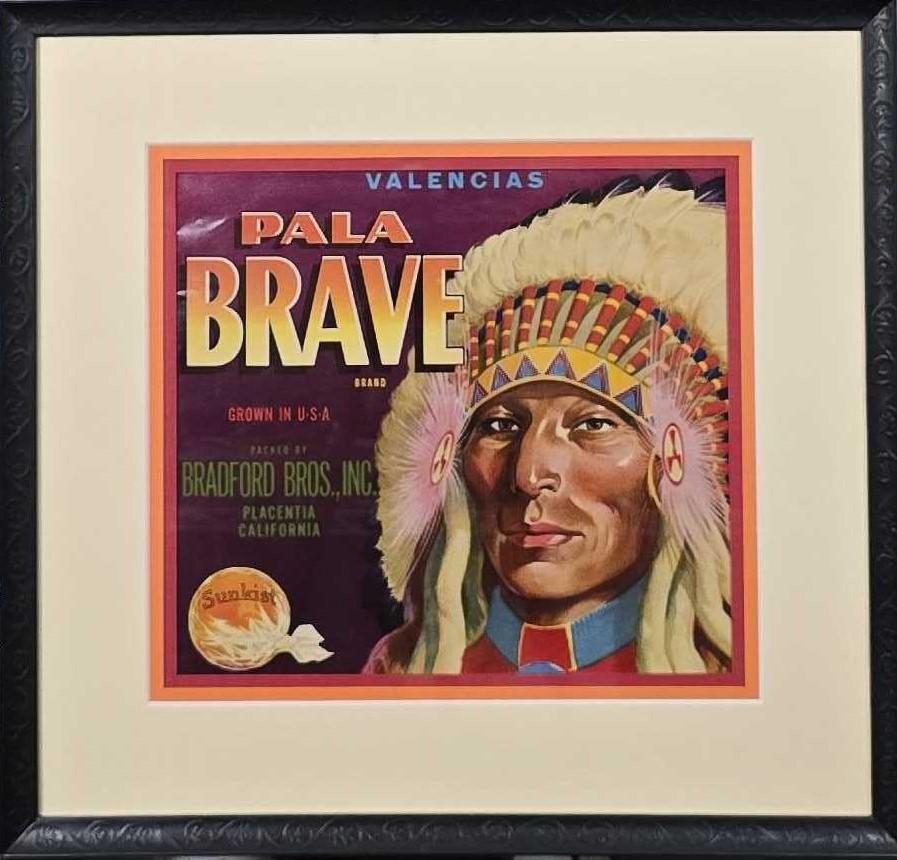
Pala Brave Sunkist Fruit Crate Label c. 1930
The Pala Brave fruit crate label, associated with Sunkist Valencias, was used by Bradford Brothers, Inc., in Placentia, California, and dates to approximately the 1930s or 1940s.
This label, measuring 10 x 11 inches, featured a striking image of a Native American chief, reflecting a common marketing theme in early 20th-century American fruit crate labels that capitalized on romanticized Western or Native American imagery to appeal to consumers. The label was printed using lithography, likely offset printing, which was standard for such labels post-1920s, and its vibrant design was intended to distinguish the brand and attract buyers.
Origin: The Pala Brave label originated in Placentia, a key citrus-growing region in Orange County, California. Bradford Brothers, Inc., was part of the California Fruit Growers Exchange, which marketed under the Sunkist brand, a cooperative known for promoting high-quality citrus, particularly Valencia oranges. The Sunkist logo on the label signified premium quality, as only the best oranges received this designation. The use of Native American imagery may also tie to the cultural context of the Pala Indian Reservation near San Diego, though no direct connection to the tribe is documented in the label’s history.
Historical Context: Fruit crate labels like Pala Brave were a significant part of the citrus industry’s marketing strategy from the late 19th to mid-20th century, particularly in California, which dominated U.S. citrus production. By the 1930s, California’s citrus industry was booming, driven by innovations like irrigation and refrigerated rail transport, which allowed oranges to reach eastern markets in good condition. Labels were crucial for brand differentiation in a competitive market, with designs often reflecting local or exotic themes to evoke quality and allure. The Pala Brave label, with its Native American motif, tapped into a broader trend where Western consumers associated such imagery with authenticity and the American frontier, a marketing tactic also seen in labels like the Mupu brand from Santa Paula, California.
Cultural Significance: Beyond commerce, the Pala Brave label reflects the era’s complex cultural dynamics. The use of Native American imagery was widespread in advertising, often idealizing or stereotyping Indigenous peoples to sell products. This raises questions about cultural appropriation, as such depictions were rarely created with input from Native communities. In the citrus industry, labels were not just functional but also collectible art, valued today for their aesthetic and historical insight into America’s agricultural and advertising history. The Pala Brave label, in mint condition and never used, is now a sought-after piece of ephemera, valued for its vibrant design and as a snapshot of mid-20th-century American consumer culture.
Sources: Pala Brave Sunkist Valencias, Bradford Brothers, Inc. fruit crate label, ca. 1930 — Calisphere – calisphere.org
Sunkist Growers, Incorporated – Wikipedia – en.wikipedia.org Vintage Unused Bradford Brothers Pala Brave Valencias Crate Label NOS | eBay UK – www.ebay.co.uk Vintage Unused Bradford Brothers Pala Brave Valencias Crate Label NOS | eBay – www.ebay.com Original Vintage Citrus Crate Label 1930s Scarce Orange Sunkist Brand California Fruit Exchange Los Angeles – Etsy – www.etsy.com Pala Brave Brand Valencias, Sunkist, Bradford Bros. Inc., Placentia, California – www.famsf.org Southern California’s great citrus had its crate advertising – Los Angeles Times – www.latimes.com California Bountiful – www.californiabountiful.com
Reviews
There are no reviews yet.