
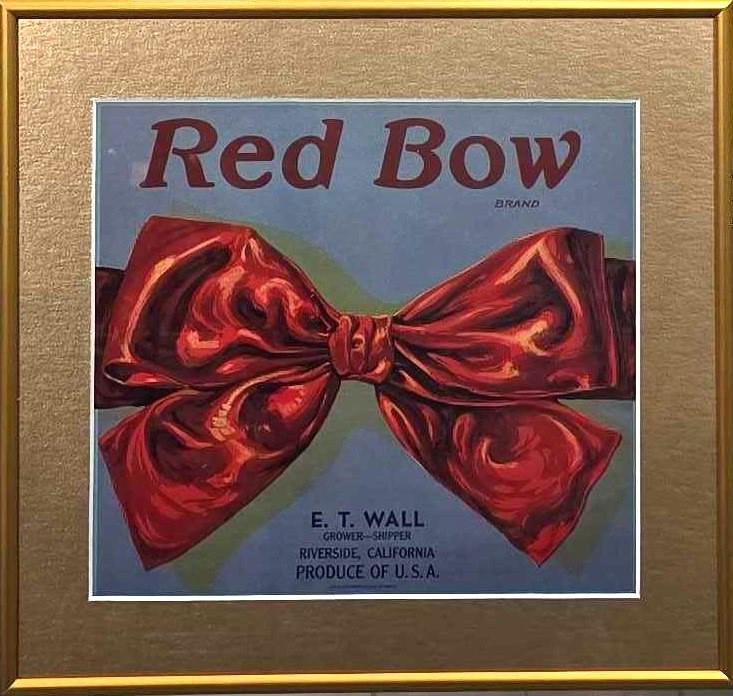
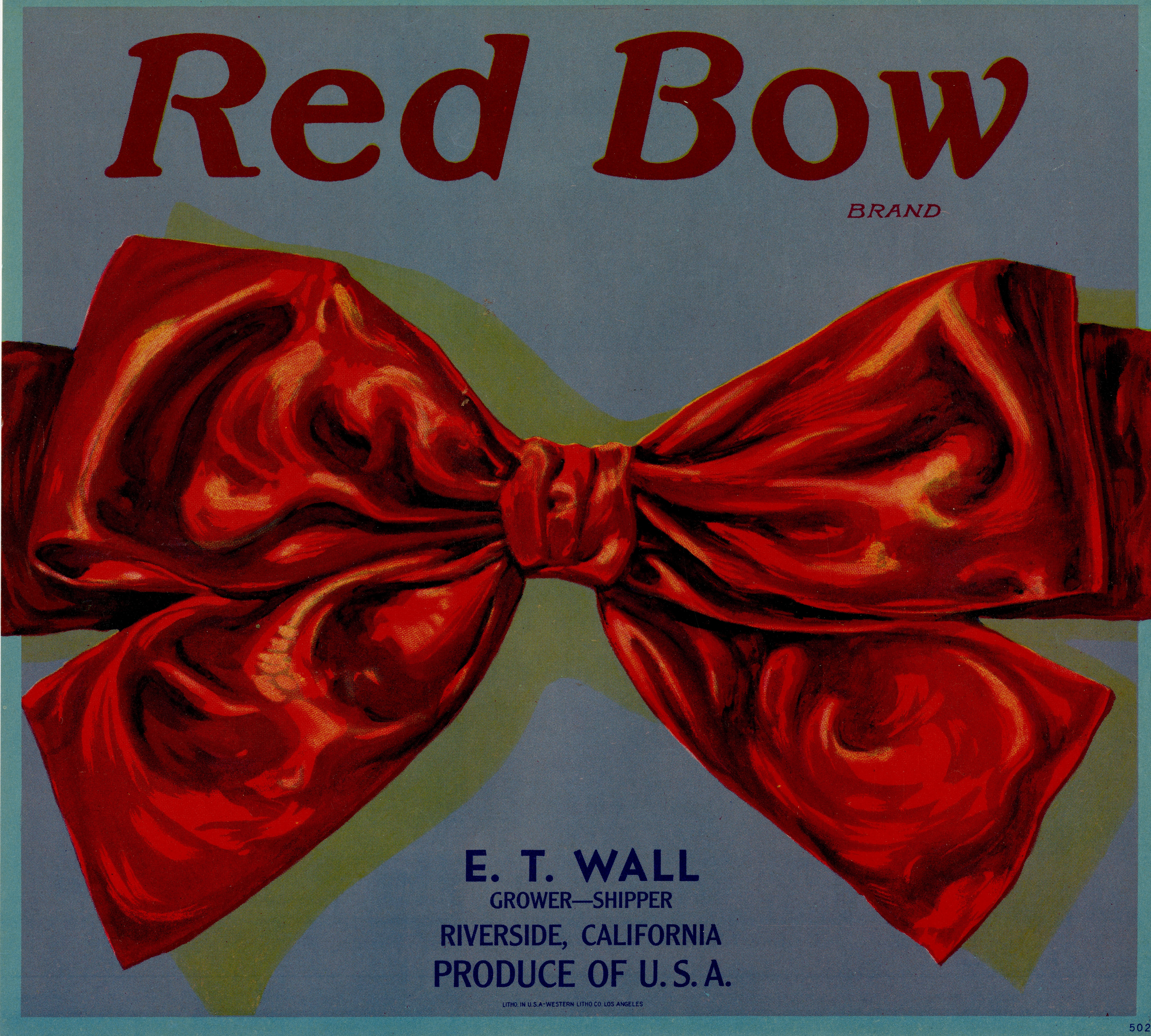
Red Bow Brand – c. 1941
Grower – Shipper E. T. Wall, Riverside, California
This gorgeous Framed Fruit Label measures 14 1/4 inches wide and 13 1/2 inches tall.
The unframed label measures 11 inches wide by 10 inches tall.
The Red Bow Brand label (often listed as “Red Bow Brand Oranges” or similar variants) is a vintage citrus crate label from Southern California, specifically tied to orange production in the Riverside area.
- History
The label primarily dates to the 1930s–1940s, during the golden age of colorful, lithographed fruit crate labels used for marketing fresh citrus shipped nationwide by rail. This era followed the post-Transcontinental Railroad citrus boom (starting in the 1880s) and preceded the shift to pre-printed cardboard boxes in the 1950s, which phased out individual end-panel labels.
The brand was used by E.T. Wall (Edgar T. Wall), a grower-shipper based in Riverside County, California (with operations noted around Vine Street addresses in some historical references). Riverside was a cornerstone of California’s “Orange Empire,” famous for introducing the Washington navel orange in the 1870s via Eliza Tibbets. By the 1930s, the region remained a major hub for premium navel and Valencia oranges, with independent packers like E.T. Wall operating alongside cooperatives. E.T. Wall also used a related “Gold Bow” brand, indicating a thematic series. The label marketed high-quality oranges (likely U.S. No. 1 or fancy grades) to distant markets, capitalizing on Riverside’s reputation for sun-ripened, flavorful fruit.
- Design, Cultural, and Historical Significance
The Red Bow Brand label is distinguished by its prominent large red bow motif, often rendered as a festive, ribbon-like element that evokes gift-wrapping or holiday cheer—sometimes described with a Christmas wrapping theme. Typical features include:
- A bold, oversized red bow as the central or dominant graphic.
- Clusters of bright oranges (or fruit illustrations).
- Branding text such as “Red Bow Brand,” “E.T. Wall Grower-Shipper,” “Riverside, Calif.,” “Produce of U.S.A.,” and grade indicators.
- Vibrant colors (reds, oranges, yellows) in classic lithography style.
The design served as a powerful marketing tool: Crate ends were displayed in wholesale markets and stores, so the eye-catching, festive bow suggested premium, thoughtful quality—like a wrapped gift from sunny California. Culturally, it tapped into mid-20th-century advertising trends that romanticized warm-climate produce as healthful and luxurious for eastern/winter consumers. The bow’s holiday-like appeal may have aligned with seasonal citrus shipments (oranges often peaked in winter). It reflects the optimistic branding of California’s citrus industry during the Great Depression and post-WWII eras, emphasizing abundance and regional pride.
Today, the label is a prized collectible in vintage fruit crate label/ephemera circles, valued for its bold graphic art, historical insight into Riverside’s citrus heritage, and nostalgic charm—often framed as mid-century California advertising art.
- Business Affiliations
- Primary: E.T. Wall (Edgar T. Wall), grower-shipper in Riverside, Calif. (independent operation; also used “Gold Bow” brand).
- Printer: Western Litho. Co. (Los Angeles), a major lithographer for Southern California citrus labels during this period.
- Contextual: Part of the independent/small packer model in Riverside’s citrus scene, separate from large cooperatives like Sunkist (though many growers shipped under both independent and co-op brands). No direct ties to bigger exchanges noted.
The brand is purely historical—no evidence of current revival or active business under “Red Bow” for citrus.
- Websites, Sources, and Visuals
Reliable sources for viewing, researching, or acquiring originals/reproductions include:
- Calisphere (Riverside Public Library collection): Archival scan of the “Red Bow Brand” label (ark:/13030/kt5779r0w1), showing the full design with the red bow, oranges, and E.T. Wall branding.
Reviews
There are no reviews yet.